Creating a relaxing home office environment is essential for anyone working remotely or spending significant time at home on their professional tasks. A space that feels calming and organized not only improves focus but also helps reduce stress, making your workday more enjoyable and productive. Whether you’re designing your office from scratch or looking to improve an existing setup, these tips will guide you in creating a peaceful and efficient workspace.
Choose the Right Space
Find a Quiet Spot
Select a part of your home that is quiet and away from heavy foot traffic. A corner in a spare room, a nook in the living area, or even a well-lit basement can work as long as it minimizes distractions.
Consider Natural Light
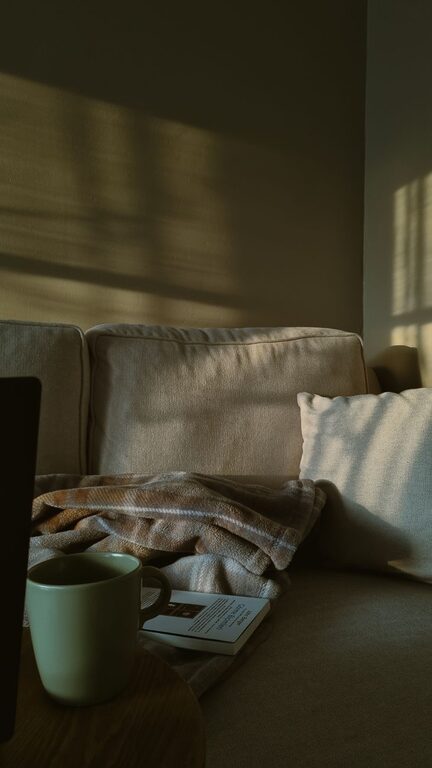
Natural light has a positive effect on mood and productivity. Set up your desk near a window to enjoy daylight. If this isn’t possible, use daylight bulbs or adjustable lighting that mimics natural light.
Invest in Comfortable and Functional Furniture
Ergonomic Chair and Desk
A comfortable chair with good lumbar support is a must to keep your posture healthy during long hours. Pair it with a desk that suits your height and offers enough space for your computer, stationery, and other essentials.
Flexible Layout
If space allows, arrange your furniture to encourage movement. Standing desks or adjustable desks that let you alternate between sitting and standing can also improve comfort and reduce fatigue.
Minimize Clutter and Organize Your Space
Use Storage Solutions
Keep your desktop tidy by using organizers, shelves, or drawers to store documents and supplies. Clutter can cause stress and distraction, so having a designated place for items makes it easier to focus.
Adopt a Clean Desk Policy
Try to clear your workspace at the end of each day. A clean desk can help you start fresh the next morning and maintain a clear mind.
Add Elements that Promote Relaxation
Choose Soothing Colors
Colors affect mood. Soft, neutral tones like light blues, greens, or grays can create a calm atmosphere. Avoid overly bright or harsh colors that can feel overwhelming.
Bring in Plants
Houseplants not only improve air quality but also add a touch of nature that can reduce stress. Easy-to-care-for plants like succulents, spider plants, or peace lilies are great options.
Incorporate Personal Touches
Add a few personal items such as photos, art, or inspiring quotes to make the space inviting and motivating without overcrowding it.
Optimize Lighting and Reduce Eye Strain
Use Task Lighting
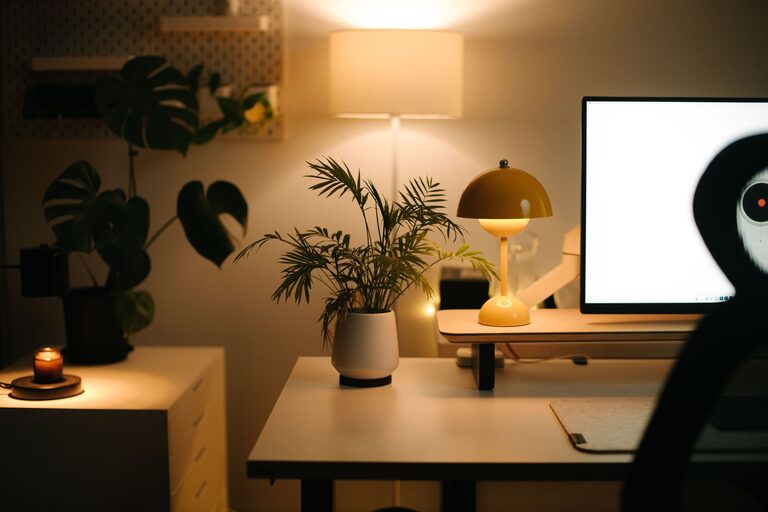
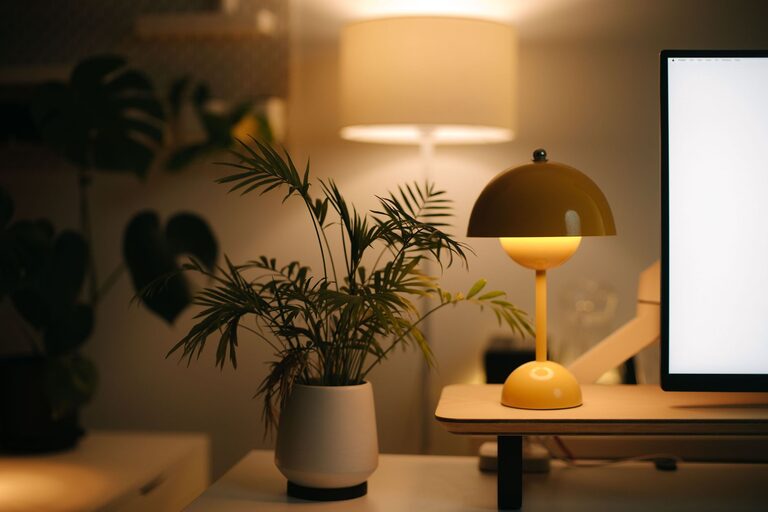
In addition to ambient light, a focused desk lamp can reduce eye strain. Adjustable lamps allow you to direct light where it’s needed most.
Reduce Screen Glare
Position your computer screen to avoid glare from windows and lights. Anti-glare screen protectors can also be helpful.
Manage Noise Levels
Use Noise-Canceling Headphones
If your home is noisy, noise-canceling headphones can help you concentrate and create a bubble of calm around you.
Play Soft Background Music
Some people find that gentle music or nature sounds help reduce distractions and enhance focus.
Create a Routine and Maintain Boundaries
Set Working Hours
Establish clear start and end times for your workday to maintain balance between work and personal life.
Take Regular Breaks
Schedule short breaks to stand, stretch, or take a brief walk. This helps prevent fatigue and refreshes your mind.
Keep Technology Organized and Efficient
Cable Management
Use clips, ties, or cable boxes to keep cords organized and off your desk. This reduces visual clutter and makes cleaning easier.
Reliable Internet and Equipment
Ensure your internet connection is stable and your computer and accessories are functioning well to avoid unnecessary frustration.
—
Building a relaxing home office environment takes a bit of planning but is well worth the effort. By combining comfort, organization, and personal touches, you create a space where you can work efficiently while feeling calm and refreshed. Start small, experiment, and adjust your setup to find what best supports your productivity and well-being.
About the Author